FOTOhub launches IDA Q 1.0, our first proprietary image generation model
FOTOhub launches IDA Q 1.0, our first proprietary image generation model, the third pillar of the platform alongside Gabriel AI and IDA Voice & Audio. Top 5 worldwide on the DesignArena benchmark, 20x cheaper than GPT-Image-2, free for 7 days.
FOTOhub launches IDA Q 1.0, our first proprietary image generation model
Category: Product Launch / AI / Technology
Date: July 24, 2026
Author: Mateusz Ulewicz, Founder & CTO
Tags: IDA Q 1.0, proprietary AI model, image generation, product launch, Gabriel AI, IDA Voice & Audio, AWS
Summary
FOTOhub.app is launching IDA Q 1.0 today, our first fully proprietary text-to-image generation model, built and hosted on FOTOhub infrastructure in partnership with AWS. It becomes the third technological core of the platform, alongside Gabriel AI (the orchestrator that understands user intent) and IDA Voice & Audio (our own voice and music engine). The model ranks in the top 5 worldwide on the DesignArena benchmark, delivers precise text rendering on images, native multilingual support, and pricing 20x lower than competing GPT-Image-2. For the next 7 days after launch, every FOTOhub user, including those on the free plan, generates images with IDA Q 1.0 at no cost.
Why this is the day we've been waiting for
Two years ago, when I started building FOTOhub, we had one strategy: integrate as many of the world's best AI models as possible into one place, so users wouldn't have to choose between dozens of platforms. That strategy worked, today we have over 200 models from 10+ providers and 750,000 users in 40+ countries.
But an integrator is not the same thing as a technology creator. Somewhere along the way we asked ourselves a question that now defines FOTOhub's next chapter: what happens if we start building our own models, tuned precisely to how our users actually create?
The answer is the IDA model family, our own line of AI technology, hosted on our own infrastructure, developed by our own team. IDA Voice & Audio already powers voice generation, voice cloning, and music for thousands of users. Today it's joined by IDA Q 1.0, an image generation model that puts FOTOhub in the group of companies that don't just integrate AI, they build it.
"We don't want to just be the best place to use other companies' AI. We want to be a company that builds its own technology, one that others will build on." Mateusz Ulewicz, Founder & CTO
Three pillars of the platform
With IDA Q 1.0 launching, FOTOhub's architecture now rests on three proprietary pillars that together add up to more than the sum of their parts:
1. Gabriel AI, orchestrator
Understands the user's natural language, decides which model and module best matches the intent, and executes the task end to end. The brain of the system.
2. IDA Voice & Audio, voice and music
Our own text-to-speech engine, music generation, and voice cloning. 50+ voices, 30+ languages, a full dubbing pipeline. Zero dependency on external audio providers.
3. IDA Q 1.0, image generation
The new third pillar. A text-to-image model designed from the ground up around precision: accurate text placement, composition control, and multilingual support within a single generation.
These three pieces don't operate in isolation. Gabriel AI already knows when to route a user's request to IDA Q 1.0, when to send it to an external model, and when to combine multiple engines into a single task. That's the difference between "we have access to 200 models" and "we have a system that thinks for you about which model to use."
What IDA Q 1.0 actually does
IDA Q 1.0 is a text-to-image model optimized around the three things that most often break the output of other generators: text on images, composition, and prompt fidelity.
Precise text rendering
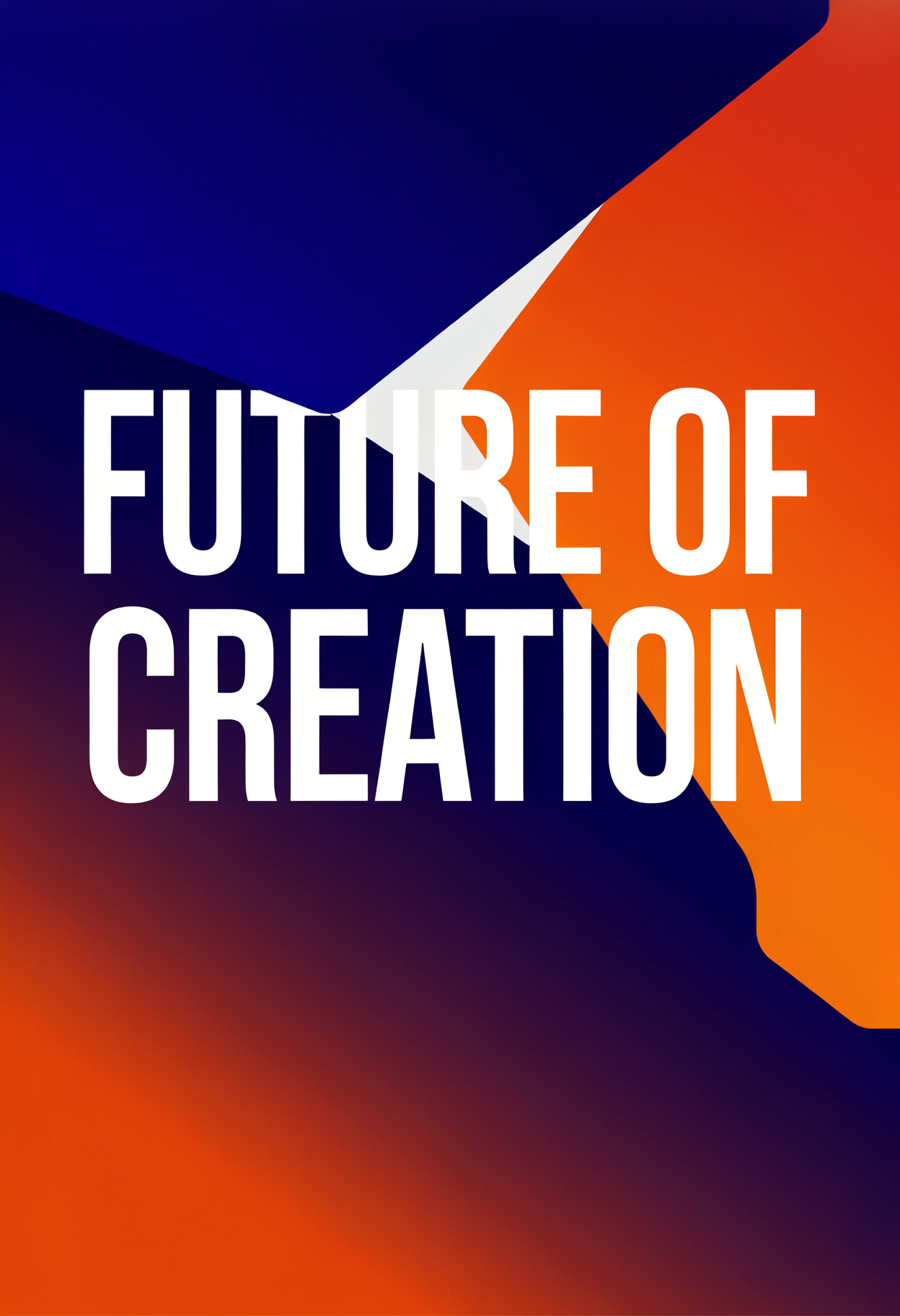
Most image generation models still struggle with clean, correct text: typos, distorted letters, misplaced headlines. IDA Q 1.0 treats text as a first-class compositional element, not an afterthought. Poster headlines, product labels, quotes inside graphics come out clean and legible, exactly as shown in our "FUTURE OF CREATION" poster example in the gallery below.
Composition control through structure
The model doesn't "guess" where things belong on the canvas. Instead, it decomposes a scene into a background and separate elements, each with its own description, position, and relationship to the others, the same way a designer actually thinks about composing a poster or a photograph. The result: fewer random artifacts, more control over the final frame.
Native multilingual support
The prompt language and the text rendered on the image can differ. The model correctly renders Polish diacritical marks (ą, ę, ń, ś, ź, ż) just as well as the standard Latin alphabet. In our coffee cup example, the handwritten note "Dzień dobry" came out flawless, letter by letter.
FOTOhub's prompt engine, our own intelligence layer
This is the part we're especially proud of, and one our team built specifically for IDA Q 1.0. Before a user's prompt reaches the model, it passes through our proprietary engine built on Claude Haiku via AWS Bedrock, which:
- Translates automatically: you write in Polish, the model receives a precise English scene description, while quoted text (signage, brand names) is preserved verbatim in its original language.
- Expands short prompts: "a woman with flowers at sunset" becomes a detailed, structured description of composition, light, and detail that the model understands far better than three raw words.
- Preserves user intent: named brands, specific colors, specific layouts are never swapped for something generic. The engine adds detail, it doesn't change what you asked for.
This isn't a cosmetic feature. It's the difference between an average result and a result that actually reflects what you had in mind, without needing to learn prompt engineering.
Benchmarks: where we actually stand
We don't like inflated PR numbers, so here are the figures as they are. On the independent DesignArena benchmark (Elo rating, measuring generation quality against real-world design tasks), IDA Q 1.0's underlying engine ranks 5th in the world with a score of 1285 Elo, just below the market leaders, and clearly ahead of a long list of established models:
| Model | Elo (DesignArena) |
| GPT Image 2 | 1405 |
| GPT-Image-1.5 | 1327 |
| Gemini 3.1 Flash Image Gen 2K | 1318 |
| Gemini 3.1 Flash Image Gen | 1310 |
| IDA Q 1.0 (underlying engine) | 1285 |
| Gemini 3 Pro Image Gen 2K (Nano) | 1284 |
| Gemini 3 Pro Image Preview | 1259 |
| UNI-1.1 | 1254 |
| Recraft V4.1 Utility Pro | 1245 |
| Krea 2 Medium | 1245 |
| FLUX.2 [flex] | 1244 |
| FLUX.2 [pro] | 1239 |
| Seedream Lite 5.0 | 1236 |
| Krea 2 Large | 1235 |
| Imagen 4 Ultra Generate Preview | 1233 |
What does this mean in practice? IDA Q 1.0 clearly beats Recraft, both Krea 2 tiers, FLUX.2, Seedream Lite, and Imagen 4 Ultra, models that are today's standard across many design tools. It's not yet at the level of Gemini Flash or GPT-Image-2, and we say that openly, without spinning the numbers. But for a model just entering the market under our own brand, 5th place worldwide on a respected benchmark is a very strong start. We'll keep improving it, and this is only the first version.
Pricing and availability
| Parameter | Value |
| Price after the free period | 0.5 credit / image |
| GPT-Image-2 price (comparison) | 10 credits / image |
| Difference | 20x cheaper |
| Resolutions | 1K (1024×1024), 1.5K (1536×1536), 2K (2048×2048) |
| Generation time | ~30s (1K) / ~90s (1.5K) / ~3.5 min (2K) |
| Free period | 7 days from launch (through July 31, 2026) |
| Availability | All plans, including free |
The 20x lower price isn't a coincidence, it's a direct result of the model running on our own GPU infrastructure, with no per-request licensing fees paid to a third-party API. When you build your own technology, you stop paying someone else's margin.
Gallery: what IDA Q 1.0 can really do
The images below were generated directly by IDA Q 1.0, with no manual curation or repeated attempts. These are the first results for each prompt, passed through the prompt engine described above.
1. Portrait in natural light
Prompt: "Kobieta z bukietem polnych kwiatów, stojąca na tle złotego krajobrazu o zachodzie słońca, elegancka sukienka, delikatny wietrzyk we włosach, fotorealistyczne, ciepłe światło godziny magicznej" (Polish: "a woman with a bouquet of wildflowers, standing against a golden landscape at sunset, elegant dress, gentle breeze in her hair, photorealistic, warm golden-hour light")
!Woman with a bouquet of wildflowers in golden sunset light
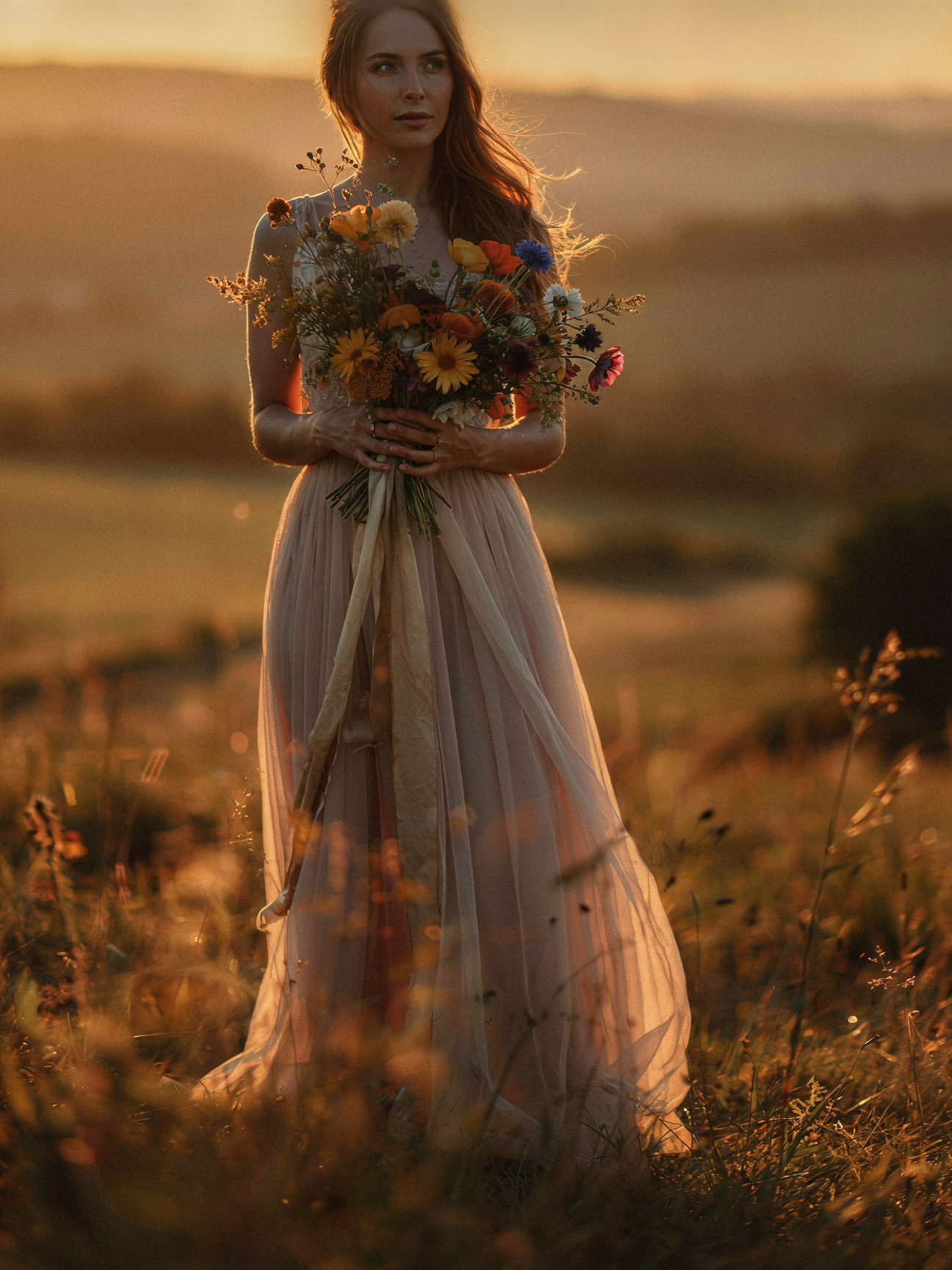
Natural golden-hour light, vivid bouquet colors, realistic background depth of field, with zero manual retouching.
2. Night scene with neon
Prompt: "Nowoczesne sportowe Porsche sfotografowane w ciemności, dramatyczne neonowe oświetlenie w odcieniach fioletu i cyjanu, mokra jezdnia odbijająca światła, miejska sceneria nocna, futurystyczny styl 2026, ultra szczegółowe" (Polish: "a modern sports Porsche photographed in darkness, dramatic neon lighting in purple and cyan tones, wet road reflecting the lights, urban night setting, futuristic 2026 style, ultra detailed")
!Sports Porsche on a wet street under neon night lighting
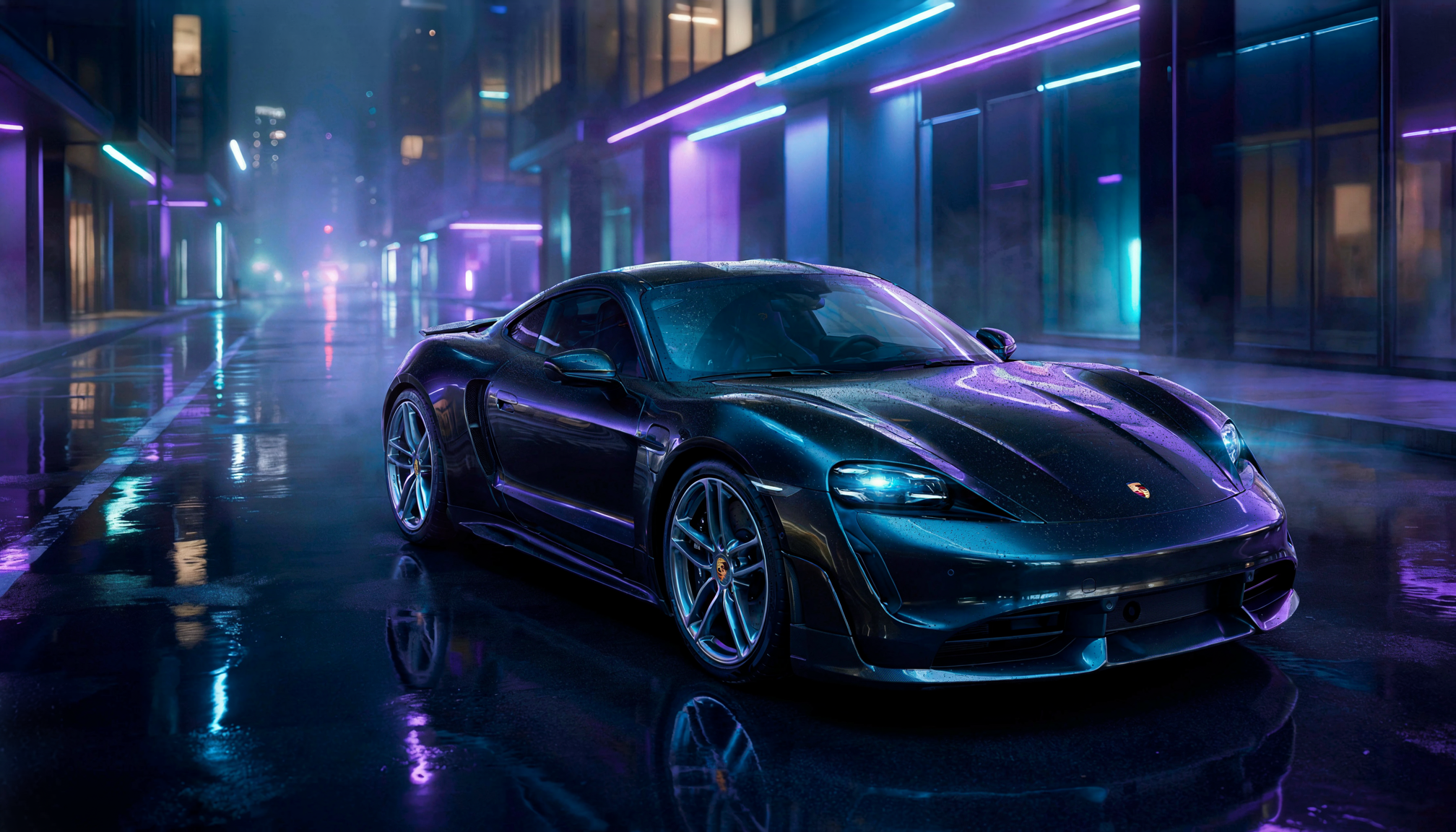
Reflections on wet asphalt, atmospheric depth, precise bodywork detail, exactly the level expected from a product campaign.
3. Text rendering: poster
Prompt: "Minimalist modern poster design with bold typography, headline text FUTURE OF CREATION in large clean sans-serif letters, geometric abstract shapes in deep blue and orange gradient background, professional graphic design, high contrast"
!Minimalist poster with the headline FUTURE OF CREATION
Zero typos, zero distorted letters. This is exactly the area IDA Q 1.0 was built to win.
4. Architectural interior
Prompt: "Luksusowe minimalistyczne wnętrze salonu z dużymi oknami, naturalne światło dzienne, drewniane akcenty, betonowe ściany, designerskie meble skandynawskie, wysokie sufity, architektura nowoczesna, fotorealistyczne wnętrze" (Polish: "a luxurious minimalist living room interior with large windows, natural daylight, wooden accents, concrete walls, Scandinavian designer furniture, high ceilings, modern architecture, photorealistic interior")
!Minimalist living room with concrete walls and large windows
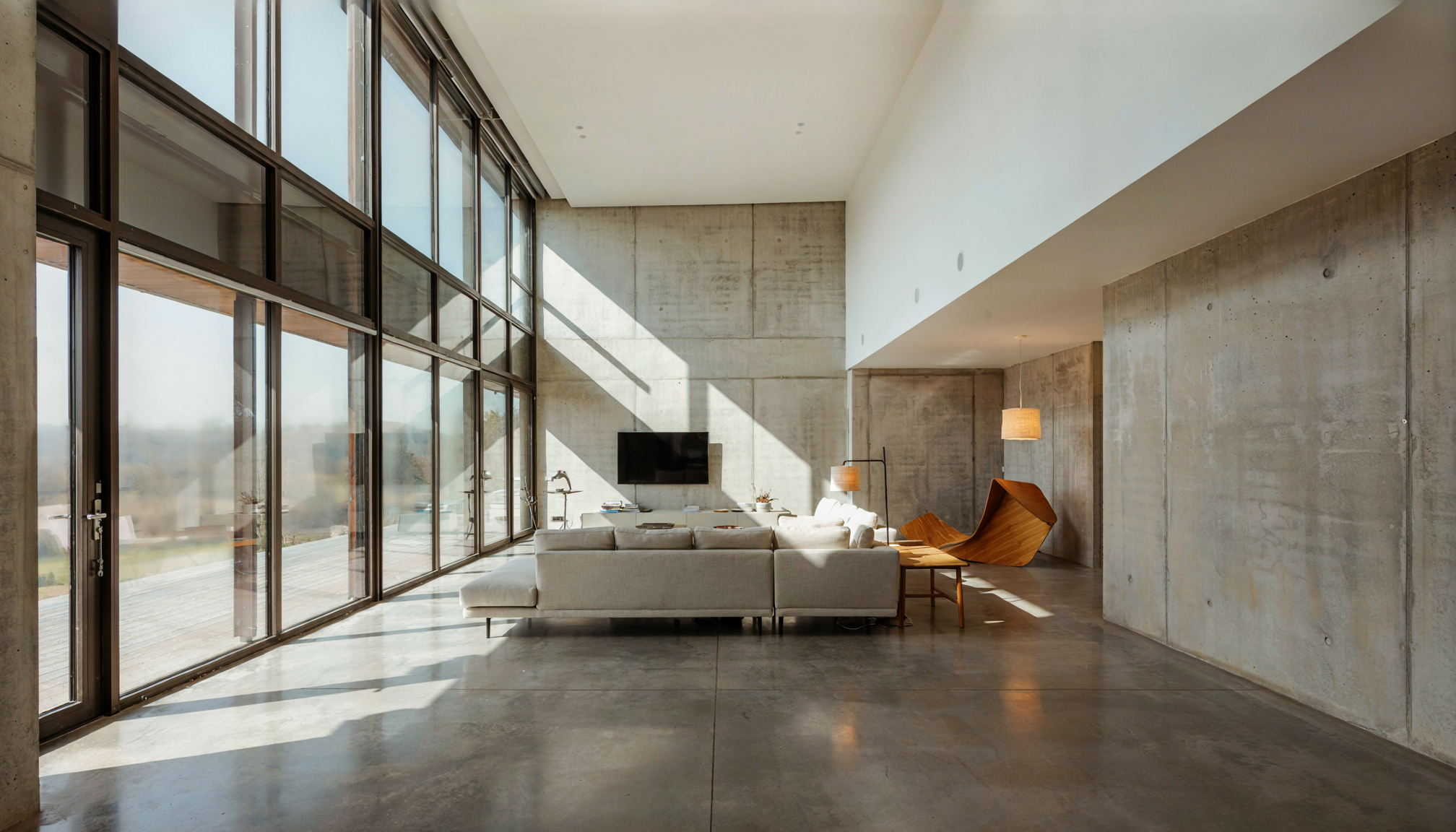
Realistic perspective, correctly proportioned furniture, natural light falling through the windows, ready to use in a real estate listing or an architect's portfolio.
5. Fantasy world
Prompt: "Fantastyczne miasto pływające wśród obłoków, kryształowe wieże połyskujące w świetle zachodzącego słońca, latające statki między budynkami, styl epicki fantasy, bogata kolorystyka, malarska iluzja głębi" (Polish: "a fantastical city floating among the clouds, crystal towers glinting in the light of the setting sun, flying ships between the buildings, epic fantasy style, rich color palette, painterly illusion of depth")
!Fantastical crystal city floating among the clouds
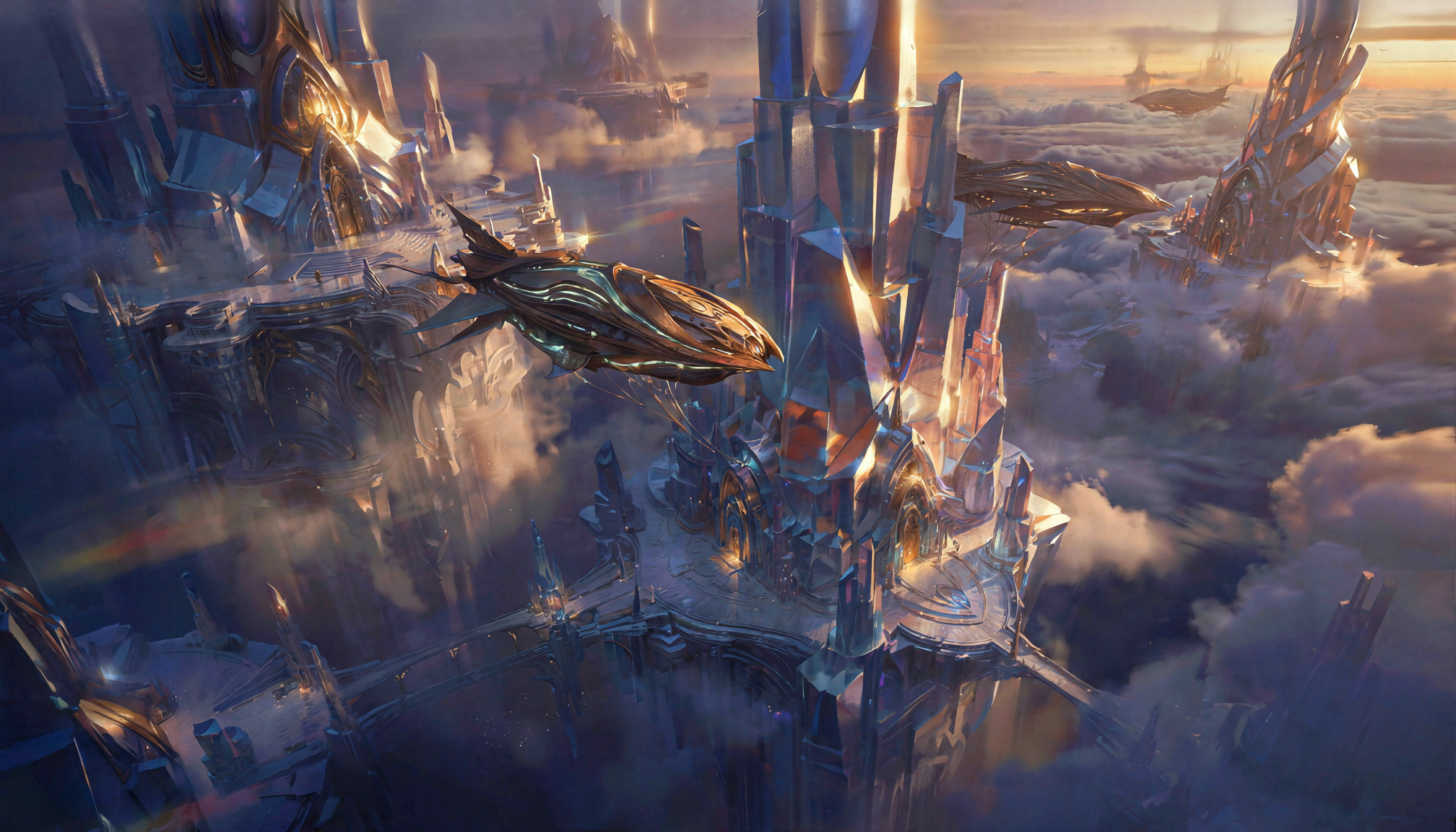
Beyond photorealism, the model handles pure creative fiction equally well, depth and light do the heavy lifting here.
6. Polish text on an image
Prompt: "Filiżanka gorącej kawy na drewnianym stole w kawiarni, obok kartka papieru z odręcznym napisem Dzień dobry, poranne światło wpadające przez okno, ciepła atmosfera, fotorealistyczne" (Polish: "a cup of hot coffee on a wooden café table, next to a piece of paper with a handwritten note saying good morning, morning light streaming through the window, warm atmosphere, photorealistic")
!Cup of coffee with a note reading Dzień dobry (good morning)
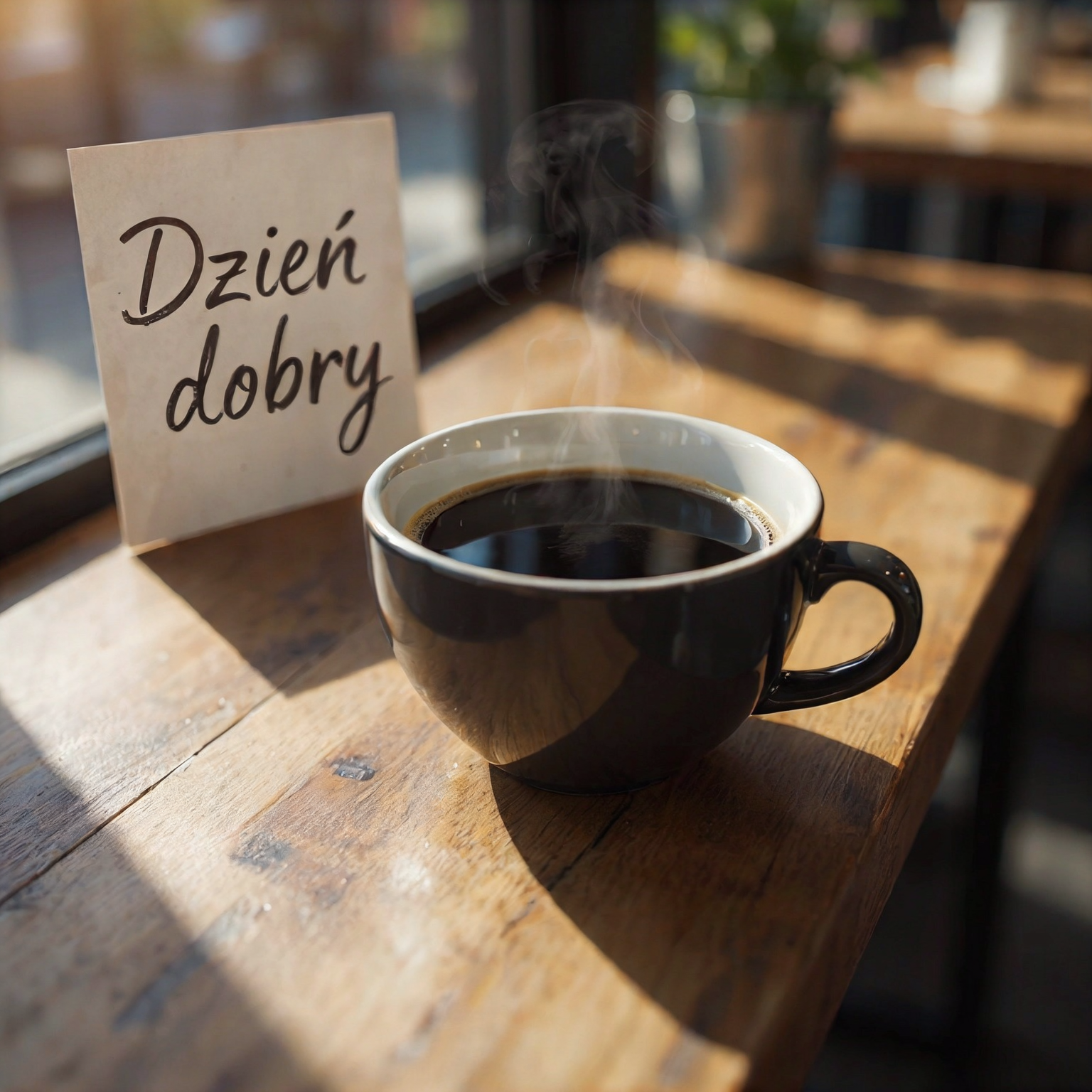
Polish diacritical marks, the "ń" in "Dzień", rendered correctly, with no distortion. For a platform with Polish roots, that's a detail we particularly cared about getting right.
Our partnership with AWS reaches a new stage
Amazon Web Services has been our investor and strategic partner since Q2 2026, first as part of a funding round, then as an AWS Portfolio Company with access to architectural support and the latest cloud technologies. Until now, that partnership mainly meant integrating AWS models (Bedrock, Nova) into our catalog and running infrastructure for our 12 modules.
IDA Q 1.0 is the natural next step in that relationship: FOTOhub's first proprietary model, running on AWS GPU infrastructure from day one, with its prompt engine powered by Claude via AWS Bedrock. It shows where our AWS partnership is heading, from "we integrate your models" to "we build our own AI technology on your infrastructure, from the first line of code." For a company like FOTOhub, building proprietary models without confidence in infrastructure scalability would be risky. Our partnership with AWS removes that risk.
What's next
IDA Q 1.0 is a first version, not a final one. In the coming months we're working on higher maximum resolution, expanded support for image editing (not just generation from scratch), and deeper integration with Gabriel AI, so the orchestrator can automatically decide when IDA Q 1.0 is the right choice for a given task, and when one of our 200+ integrated models is a better fit.
The IDA family, Voice & Audio, and now Q 1.0, is the foundation we'll keep building on. This is a strategy, not a one-off project: FOTOhub is moving from a company that integrates other people's AI exceptionally well to a company that builds its own technology.
IDA Q 1.0 is available today for all FOTOhub users, including the free plan, and free for the next 7 days. Log in at fotohub.app, select IDA Q 1.0 in the image generator, and see for yourself.
We're building our own technology. And sharing it with everyone who creates.
Mateusz Ulewicz
Founder & CTO, FOTOhub
Top 5 / 2.1M in the main Crunchbase category
FOTOhub, Creative AI OS
fotohub.app | [email protected]
Crunchbase: crunchbase.com/organization/fotohub
Investor Relations: fotohub.app/investors
FOTOhub, 750K+ Users | $8.6M Raised | $180M Valuation | AWS Portfolio Company